

Blood Flow Restriction Training: When It Helps in Rehab
Sometimes the joint is not ready for heavy loads, but the muscle still needs a reason to grow. That is the problem blood flow restriction training (BFR) was built to help with.
In orthopedic rehab, BFR can be useful when it is applied with clear indications, proper equipment, and clinical judgment. It is not a shortcut, and it is not for everyone. Here is how we think about it.
What BFR Is Doing
BFR uses specialized cuffs to partially restrict blood flow during low-load exercise. The metabolic stress can drive strength and hypertrophy adaptations similar to heavier training, with less mechanical stress on healing tissue.
In plain terms, a cuff placed high on the arm or leg limits how much blood leaves the working muscle. The muscle fatigues quickly even though the weight is light. Your body responds as if the work were harder than it was. Because the load on the joint stays low, you can often train the muscle while the surgical site or irritated tendon is still protected.
That makes it valuable after surgery or during irritable tendon and joint phases. Note the word "partially." The cuff is not a tourniquet, and it should never feel like one. Pressure is set based on the person, the limb, and the equipment, which is exactly why random straps and guesswork do not belong in this conversation.
When BFR Helps
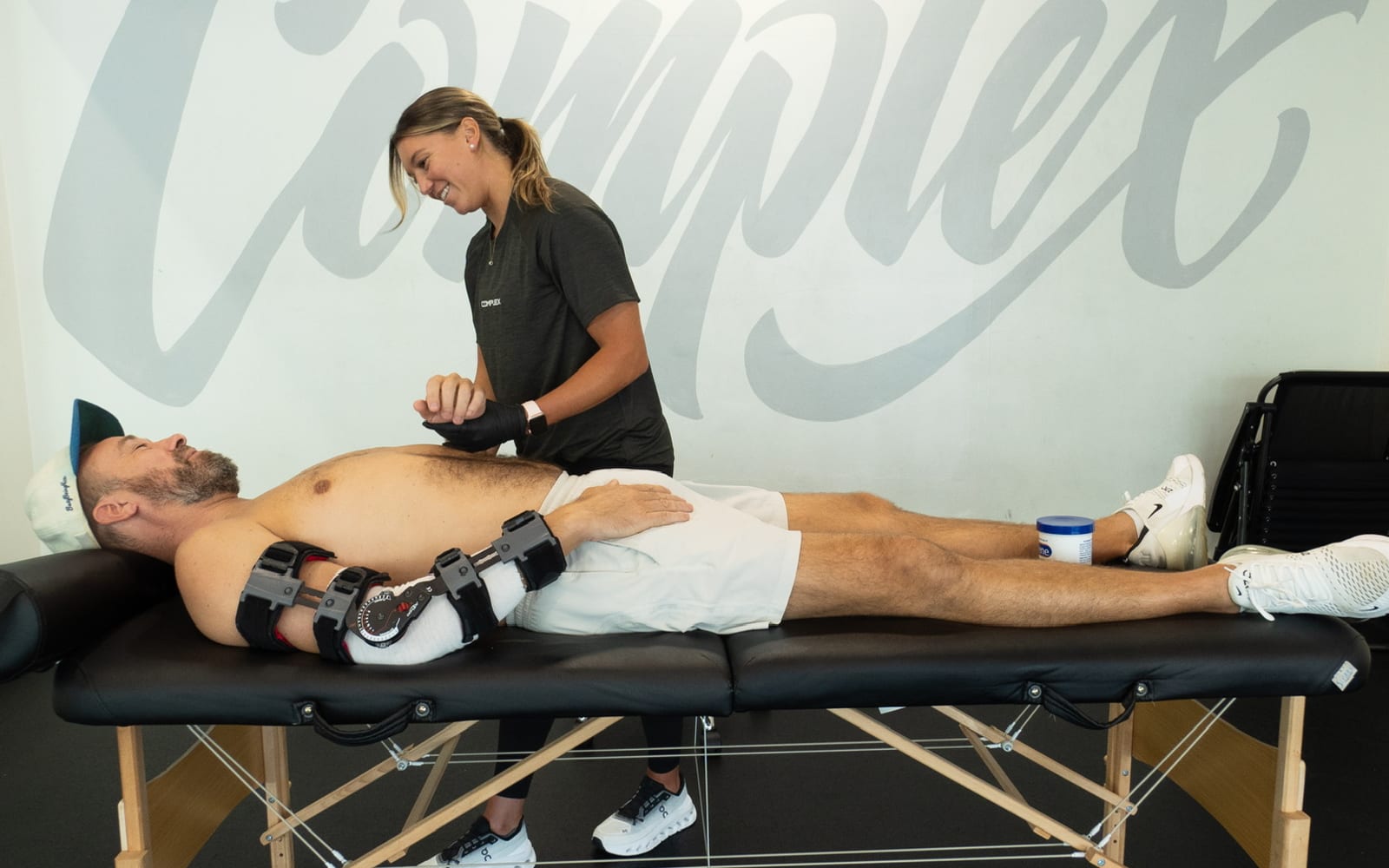
- Early post-op strength when heavy loading is restricted
- Quad shut-down after knee procedures
- Maintaining muscle while pain limits conventional intensity
- Bridging from protected rehab into normal gym loading
It is a tool, not a personality. We use it when the problem matches the method.
Quad shut-down is a good example. After many knee procedures the quadriceps struggle to activate fully, and heavy leg extensions are off the table. A light, controlled set with the cuff can give the muscle a meaningful stimulus without the joint paying for it. The same logic applies to other muscles around a protected shoulder, hip, or ankle.
BFR can also help during a stubborn flare of a tendon or joint, when normal training intensity keeps irritating things. Instead of losing months of muscle, you maintain some of it while the area calms down. For a broader look at how this fits after surgery, see our guide to the first six weeks of post-op orthopedic rehab.
When BFR Is the Wrong Move
- Uncontrolled hypertension or clotting risk without medical clearance
- Poor cuff fit or unsupervised guessing with random straps
- Using BFR to avoid eventually rebuilding real heavy-load capacity
- Chasing fatigue instead of chasing a plan
BFR should accelerate the path back to normal loading, not replace it forever.
Screening matters. A history of blood clots, uncontrolled high blood pressure, certain vascular or circulation conditions, and some other medical situations can make BFR inappropriate, or mean you need your physician's clearance first. If you have any of these, say so at your evaluation. Your PT will decide whether BFR is appropriate and will coordinate with your doctor when needed. We do not give medication advice, and we will not guess about medical clearance.
The other wrong move is more philosophical. Bodies that never go back to heavy, honest loading stay fragile. BFR is a bridge. If you are still using it six months after you could have been squatting properly, the plan has drifted.
What a BFR Session Can Look Like
Every plan is individualized, but a typical session may include:
- A quick check of how the joint and limb feel that day
- Proper cuff placement and pressure set by your clinician
- Several sets of a light-load exercise, often with short rests
- Close attention to form, because fatigue shows up fast
- Cuff removal, a cool-down, and a check on how the limb responds
You should expect to feel the muscle working hard, sometimes more than you expect for the weight on the bar. You should not expect sharp pain, numbness, tingling, or a limb that looks dusky or feels wrong after the cuff comes off. If any of that happens, tell your clinician immediately. Get evaluated for sharp pain, numbness, new swelling, or calf pain and warmth, since those need attention regardless of the tool being used.
How We Pair It With Real Rehab
BFR sits inside a bigger progression:
- Protect and restore motion
- Rebuild activation and low-load capacity
- Transition into conventional strength
- Return to sport or gym demands
It is one layer within a physical therapy plan, never the whole plan. Motion, movement quality, gait, and the rest of the body still need attention. As tissue tolerance improves, the cuff comes off and the loads go up.
If your goal is the gym again, keep the bridge program in the conversation from day one. The end goal is not to be good at BFR. It is to be strong enough that you do not need it.
Frequently asked questions
Does BFR hurt?
It is usually described as pressure and a deep muscle burn, not sharp pain. The cuff can feel tight, and the working muscle tires quickly. Sharp pain, numbness, or tingling is not expected, and you should tell your clinician right away if you notice them.
Can I do BFR at home with my own straps?
We would not recommend it. Pressure, cuff width, and screening all matter, and guessing can be unsafe. Supervised sessions let your clinician set the dose for your limb and your situation.
How long will I need BFR?
It depends on your injury, your surgeon's restrictions, and how quickly you tolerate conventional loading. For many people it is a temporary tool, used during the stage when heavy lifting is not yet appropriate. Your PT will reassess as you progress and move you toward standard strength work.
Let's get you better. Ask Sebastian about BFR for your rehab or schedule a session. You can also see how we work at our Wynwood and South Miami clinics.
Ready to Start Your Journey?
Tell us your goals and we'll build a personalized plan to get you moving, stronger, and performing at your best.