

Tennis Serve Shoulder Care for Competitive Players
Your serve is a weapon until your shoulder becomes the limiting factor.
As a former collegiate tennis player, coach, and physical therapist, I care about serve speed, and I care even more about whether you can still hit it in month four of the season. Good tennis serve shoulder care is not complicated, but it does need to be consistent. Most competitive players have a plan for their forehand and no plan for the joint that makes the serve possible.
Why Serves Beat Up Shoulders
The serve combines extreme external rotation, rapid acceleration, and violent deceleration. Add match volume, travel, and incomplete recovery, and the shoulder starts negotiating.
Common issues:
- Posterior cuff weakness
- Scapular dyskinesis
- Thoracic stiffness
- Kinetic-chain leaks from hip and core
- Serve volume spikes after time off
Here is what that looks like in real life. In the cocking phase, the arm lays back into a lot of external rotation. In the acceleration phase, the trunk and hips drive the racquet through contact. Right after, the back of the shoulder and the shoulder blade muscles have to slow everything down. If any link is weak, stiff, or late, the shoulder absorbs the leftover work.
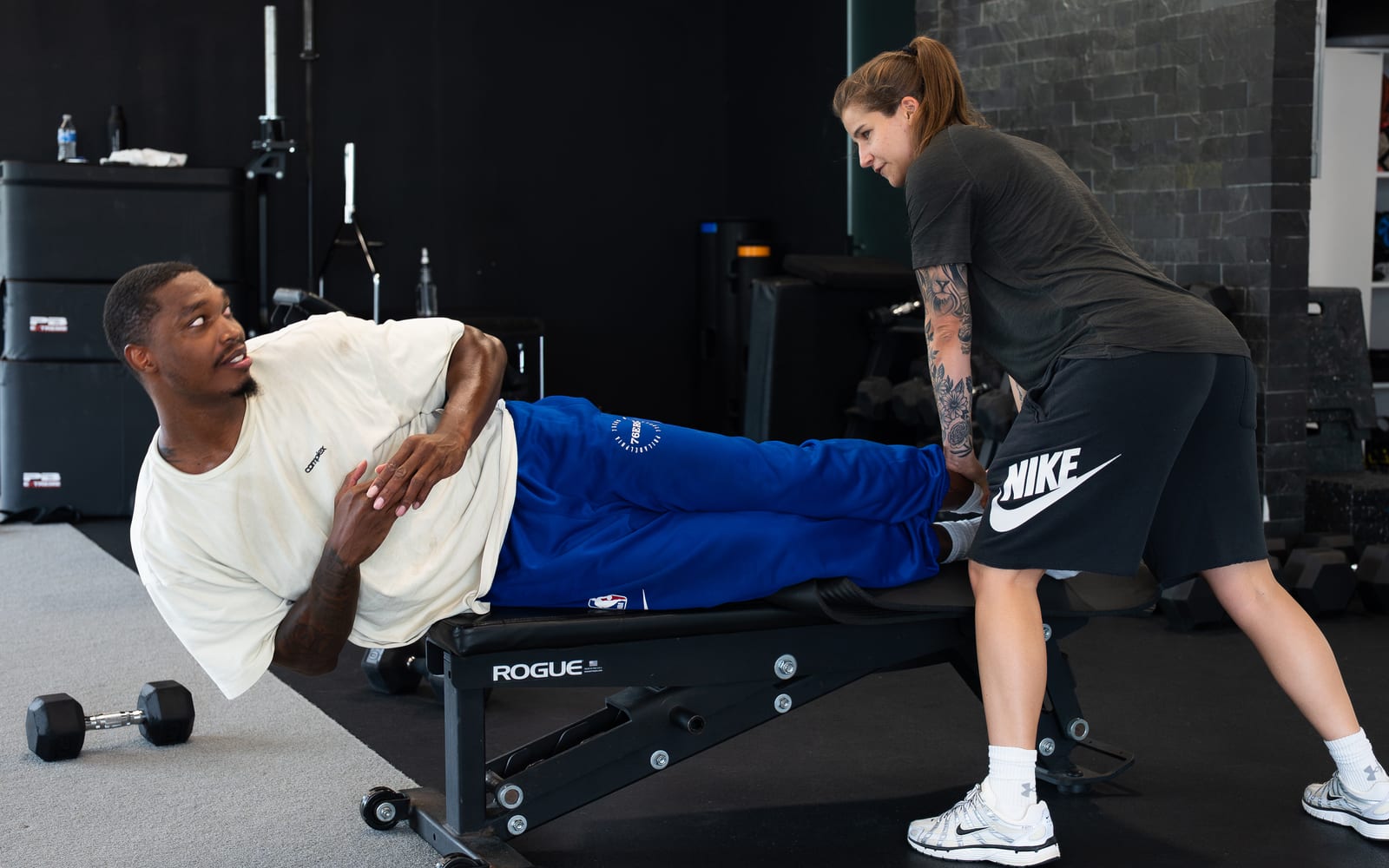
The kinetic chain matters more than most players think. A serve that starts from the legs, travels through a rotating trunk, and finishes through the arm spreads the load around. A serve with stiff hips, a locked upper back, or a weak core pushes more of the job onto the shoulder. That is why a tennis shoulder program should never be only band exercises for the cuff.
Volume spikes are the other big one. A player who rests for two weeks, then returns and hits a hundred serves in a practice because they feel behind, is asking for trouble. Tissue adapts to the load it has been seeing, not the load you wish it had been seeing.
The In-Season Shoulder Standard
You do not need a two-hour gym session to protect your shoulder. You need a short, repeatable routine that survives a busy tournament schedule.
Every training week
- Scapular control work
- Rotator cuff endurance
- Posterior chain and hip rotation
- Thoracic mobility
A simple week might include two short strength sessions. One could focus on shoulder blade control and cuff endurance, with rows, prone raises, and light external rotation work done with good form rather than heavy weight. The other could focus on legs, hips, and trunk rotation, since that is where serve power starts. Add a few minutes of thoracic rotation work before you hit. If you are not sure how to scale any of this, our performance training team can build it around your schedule.
Every serve block
- Progressive warm-up from shadow to full speed
- Hard-serve caps on high-volume days
- Next-day arm check: stiffness vs warning-sign pain
The next-day check is underrated. Mild stiffness that loosens up as you warm up is often normal training stress. Pain that is sharper, lingers, gets worse during the day, or changes how you serve is something else. Pay attention to the pattern. A shoulder that feels a bit more tired after a hard week is giving you information, and a shoulder that hurts more each day is giving you a lot more.
Also track your serve counts during practice, not only matches. Many players are surprised by how much serving they do between drills, ball machine sessions, and lessons. If you are going to have a heavy match week, plan lighter serve days around it.
If you are sorting medial vs lateral elbow pain from racquet loading, read tennis elbow vs golfer's elbow.
Return-to-Serve Progression
If you have been off the court with shoulder pain, you cannot go straight back to full serving. A return-to-serve progression keeps you moving forward without restarting the problem.
- Pain-free shadow serves
- Progressive effort at reduced volume
- First-serve and second-serve patterning
- Point play with serve caps
- Full match simulation
Each step has a purpose. Shadow serves let you check the motion without ball impact. Reduced effort and volume let the tissue tolerate load again. Patterning first and second serves brings back the different demands of flat power and spin. Point play with caps adds the unpredictability of real tennis while still limiting total serves. Match simulation tests whether the shoulder can handle a full day of play.
Move up when the current step feels good during and after the session, and the arm is not worse the next day. Your PT can help you set serve counts that fit your situation, since they depend on your level, history, and what caused the problem.
Skipping steps is how "I'm fine" becomes "I need imaging."
Know When It Is More Than Soreness
Shoulder pain that wakes you at night, numbness or tingling down the arm, a sudden loss of strength, visible swelling, or sharp pain with simple movements should be evaluated rather than trained through. The same goes for pain that keeps building over a couple of weeks even though you have backed off. Those are not signs of a weak player. They are signs that the shoulder needs a closer look.
Competitive Player Reality
You do not need zero discomfort forever. You need a plan that distinguishes normal training stress from tissue overload, and a shoulder program that is as non-negotiable as hitting. The players who stay healthy through a season usually are not the ones with magic exercises. They are the ones who do the boring things on the days nobody is watching.
Frequently asked questions
Can I keep playing tennis with shoulder pain?
Sometimes, with changes. Many players can keep hitting groundstrokes and doing lower-body work while limiting serves and overheads. If the pain is sharp, getting worse, or affecting your sleep, get evaluated before pushing through.
Is a scapular dyskinesis diagnosis a big deal?
Not by itself. Many athletes who throw or serve have some change in shoulder blade motion, and it does not always cause pain. What matters is whether the movement pattern is linked to your symptoms, which is something your PT can assess.
How many serves should I hit when I return?
There is no one number that works for everyone. Your PT will set serve counts based on your level, how long you have been out, and how the shoulder responds, then build them up gradually.
Let's get you better. If you are dealing with a nagging shoulder or want to protect your serve before the next season, our physical therapy team is ready to help. Book your tennis rehab plan with Valeria or schedule an evaluation.
Ready to Start Your Journey?
Tell us your goals and we'll build a personalized plan to get you moving, stronger, and performing at your best.