

Hamstring Strains Keep Coming Back? Here’s the Fix
If your hamstring keeps grabbing every time you sprint, cut, accelerate, or open your stride, I need you to stop calling it bad luck. Recurring hamstring strains happen for a reason. Usually, that reason is simple: you healed the pain, but you never rebuilt the system.
That means your tissue may feel fine during normal life, but it is not ready for the speed, stiffness, and force of sport. You stretch it, massage it, rest it, maybe do a few curls, and then you sprint again. Boom. Same movie, same ending, and somehow everyone acts surprised.
A real fix for a recurring hamstring strain has to rebuild lengthened strength, lumbopelvic control, sprint mechanics, and progressive exposure to high-speed running. That is the plan. Not vibes. Not guessing. Let's get it.
Why Hamstrings Re-Injure So Often
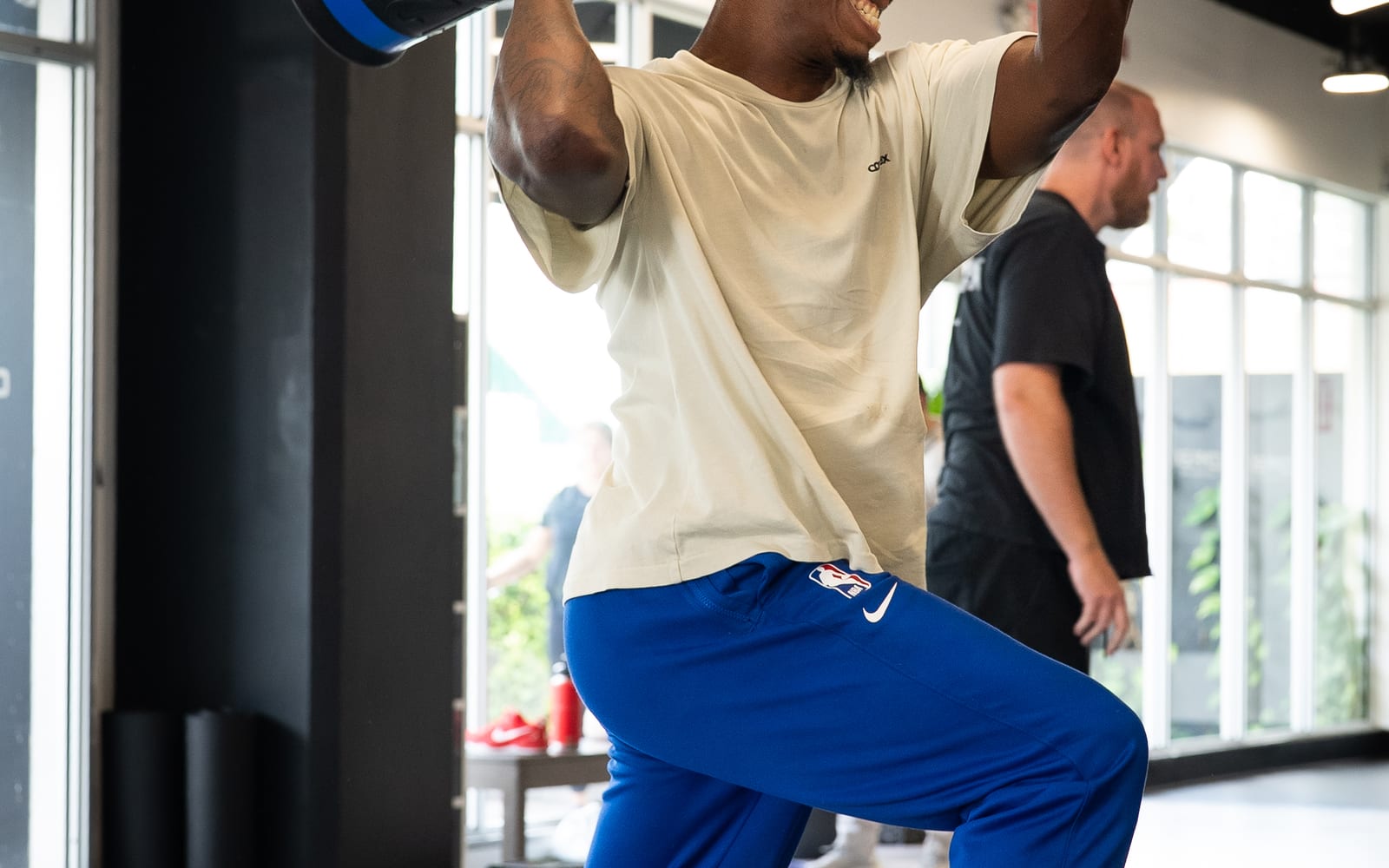
The hamstring has a very rude job. It helps extend the hip, flex the knee, decelerate the lower leg during sprinting, and tolerate big forces while it is lengthening. That last part matters. Many athletes only strengthen hamstrings in shortened or comfortable positions, then ask them to survive high-speed running at long muscle lengths. That math is terrible.
Research on elite footballers and sprinters has shown that rehab emphasizing lengthening exercises can lead to faster return times than conventional programs. The message is not "do one magic exercise." The message is that the hamstring has to become strong where sport actually loads it.
If you have had multiple strains, your risk is already higher. Prior injury is one of the biggest predictors of future hamstring issues. That does not mean you are doomed. It means your plan of care needs to be sharper than a generic three-week rest-and-stretch routine.
The Mistake: Treating Pain Like Readiness

Pain going away is not the finish line. It is the entry fee.
Most athletes return once walking feels fine, jogging feels fine, and a few bodyweight movements feel fine. Cool. That proves you can be a functioning human. It does not prove you can hit top speed, tolerate repeated accelerations, or decelerate without compensation.
At Complex, we do not treat readiness as a feeling. We look at it on an individual basis. Can you hinge without shifting? Can you produce force on one leg? Can you sprint progressively without fear or tightness? Can you repeat high-speed efforts without your pelvis looking like it filed a complaint? That is the stuff that matters.
If your plan stops when symptoms stop, you did rehab. If your plan continues until your hamstring is ready for sport, you built performance.
Step 1: Rebuild Lengthened Hamstring Strength
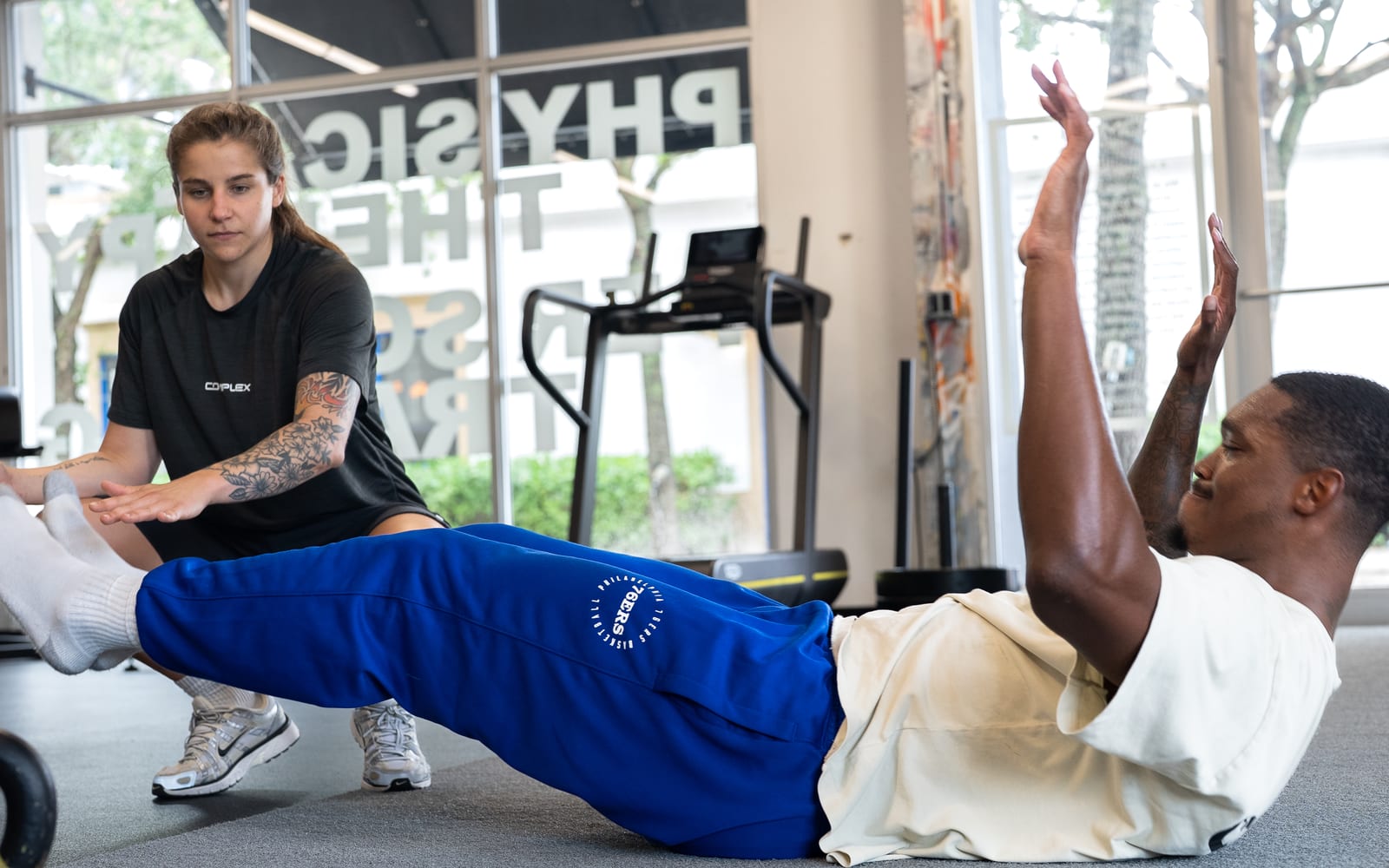
The hamstring needs eccentric strength at long muscle lengths. This is where exercises like sliders, razor curls, assisted Nordic hamstring variations, and long-lever bridge progressions come in.
But let me be clear: do not just jump into aggressive Nordics because you saw them on Instagram. We are doing this simply because it's best for your function, but also because it's what I chose. And what I choose is progression.
Start where you can control the position:
- Long-lever bridge holds
- Hamstring walkouts
- Slider eccentrics
- Romanian deadlifts
- Assisted Nordic lowers
- Sprint-position isometrics
The goal is not soreness. The goal is capacity. You should feel the hamstring working without sharp pain, cramping, or protective tightness. If every rep turns into a survival event, the exercise is too far ahead of your current capacity.
Step 2: Fix the Pelvis and Trunk
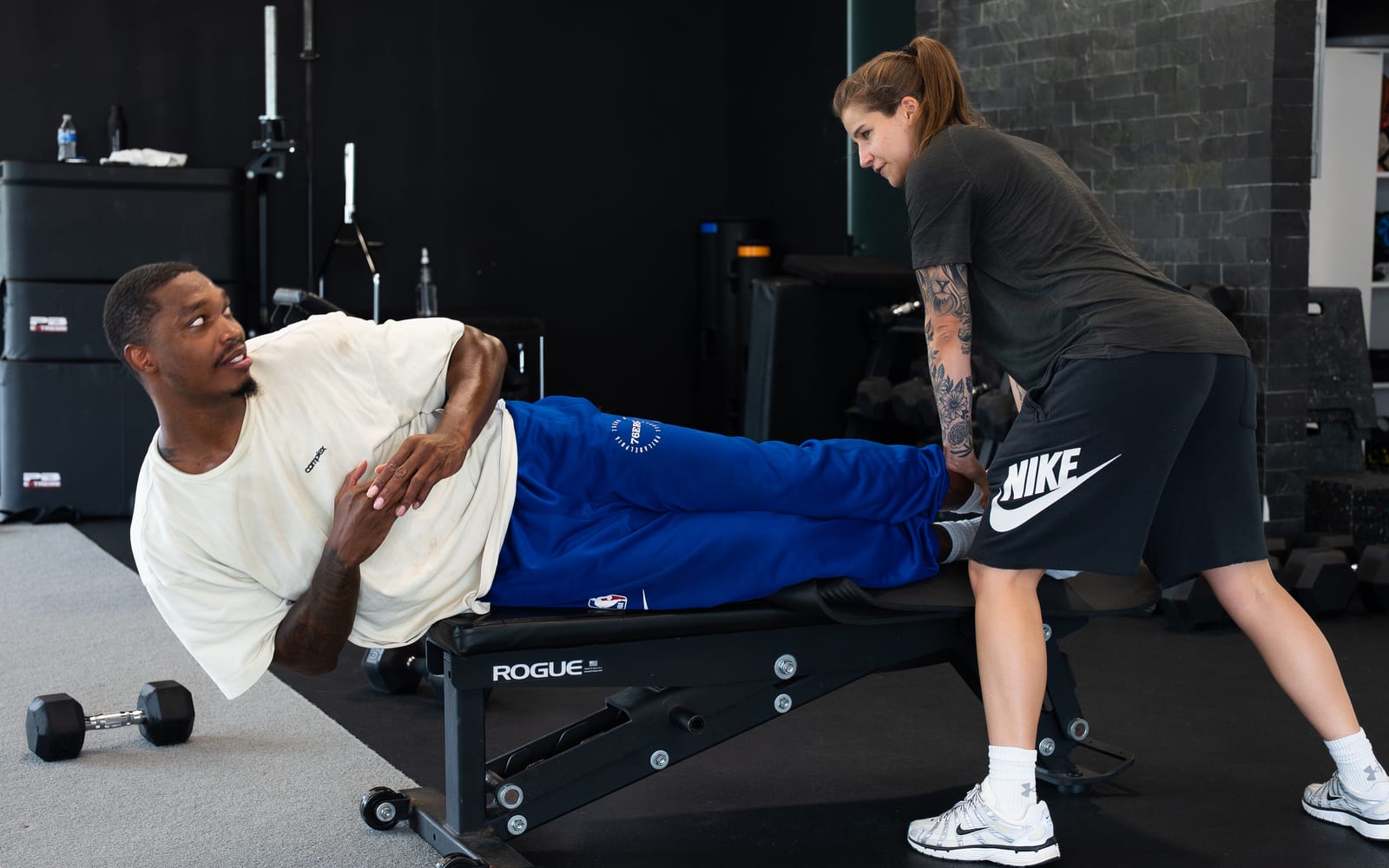
Your hamstring does not work alone. If your pelvis is dumping forward, your trunk is rotating all over the place, or your glutes are sleeping through the meeting, the hamstring gets overloaded.
That is why recurring hamstring rehab has to include trunk and hip control. We need your pelvis to stay organized while you run, lift, and change direction. You can call it core work if you want, but I am not talking about random planks until your elbows hate you.
I am talking about:
- Dead bugs with clean rib position
- Side planks with hip abduction
- Single-leg RDLs
- Split-stance cable chops
- Marching and skipping drills
- Resisted sprint posture work
If your rib cage, pelvis, and hip cannot coordinate at slow speed, they will not magically coordinate at sprint speed. That is not how bodies work. That is how hamstrings get irritated.
Step 3: Progress Running Like Strength Training
The fastest way to re-injure a hamstring is to treat sprinting like a light switch. One day you are jogging. The next day you are racing your friend who definitely has no business racing either. Congratulations, you made a donation to the setback fund.
High-speed running needs progression. We build it like strength training:
- Walk-run intervals
- Tempo runs
- Strides at 60-70%
- Accelerations at 70-80%
- Flying sprints at controlled intensity
- Repeated sprint exposure
- Sport-specific cutting and reactive work
Volume matters. Intensity matters. Recovery matters. If you spike any of them too fast, your hamstring notices.
This is where load management connects directly to recurring strains. If you keep bouncing from "nothing" to "all out," read our guide on load management and injury prevention. It will save you a lot of drama.
Step 4: Test Before You Trust It
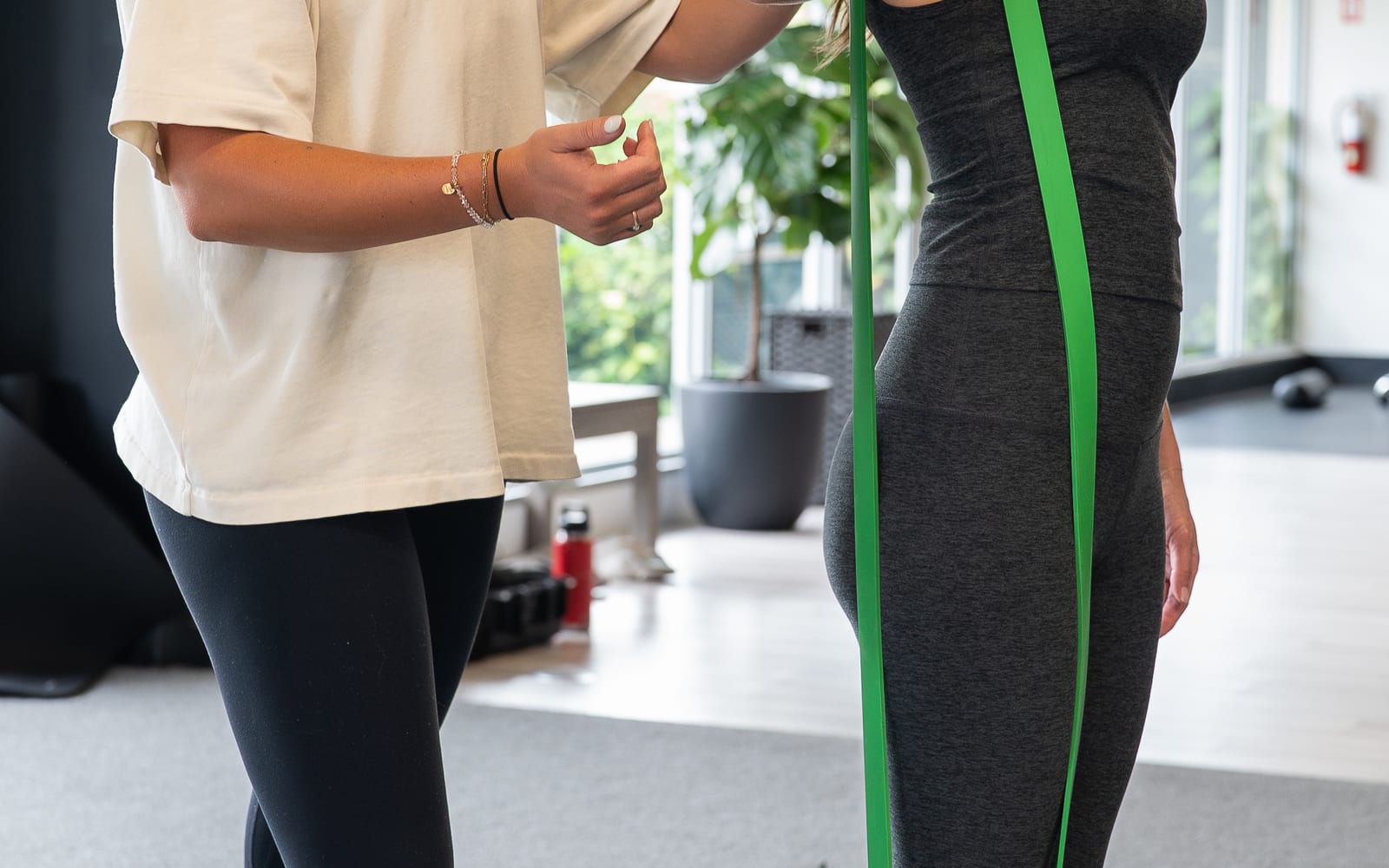
Before you return to full sport, we need proof. Not a motivational quote. Proof.
Useful checkpoints include:
- Pain-free range of motion compared side to side
- Single-leg hinge control
- Hamstring strength at different knee angles
- Repeated bridge or curl tolerance
- Acceleration mechanics
- Exposure to near-max speed
- Confidence during sport-specific tasks
If you are also coming back after a bigger setback, read Return to Sport: Rebuild Without Re-Injury. The same principle applies: clearance without capacity is not readiness.
Quick Takeaways
- Recurring hamstring strains usually happen because the system was never fully rebuilt.
- Pain-free jogging does not prove sprint readiness.
- Lengthened eccentric strength is non-negotiable.
- Pelvis, trunk, and hip control directly affect hamstring load.
- Sprinting must be progressed like a training variable.
- Testing should include strength, speed exposure, and sport-specific confidence.
- A smart plan beats another random rest period every single time.
FAQs
1. Should I stretch a recurring hamstring strain?
Maybe, but stretching alone will not fix the problem. If the tissue lacks strength, control, or sprint exposure, stretching just makes you temporarily feel productive.
2. Are Nordic hamstring curls enough?
They help, but they are not the whole plan. You still need hip control, sprint mechanics, progressive running, and sport-specific work.
3. When can I sprint again after a hamstring strain?
When you can tolerate progressive running, lengthened hamstring loading, and acceleration drills without pain, guarding, or next-day tightness.
4. Why does my hamstring feel tight even after rehab?
Sometimes tightness is protection. Your nervous system may not trust the hamstring under load yet. We fix that with progressive exposure.
5. Do I need imaging?
Not always. But if symptoms are severe, recurring, or include bruising, major weakness, or a sudden pop, get assessed.
References
- Askling, C. M., et al. (2013). "Acute hamstring injuries in Swedish elite football: a prospective randomised controlled clinical trial comparing two rehabilitation protocols." British Journal of Sports Medicine.
- Askling, C. M., et al. (2014). "Acute hamstring injuries in Swedish elite sprinters and jumpers." British Journal of Sports Medicine.
- Hickey, J. T., et al. (2017). "Rehabilitation After Hamstring-Strain Injury Emphasizing Eccentric Strengthening at Long Muscle Lengths." Journal of Sport Rehabilitation.
- Martin, R. L., et al. (2022). "Hamstring Strain Injury in Athletes." Journal of Orthopaedic & Sports Physical Therapy.
Let's get you better. Start your performance plan with Reese or book a session so we can stop the cycle and build the hamstring capacity your sport actually requires.
Ready to Start Your Journey?
Tell us your goals and we'll build a personalized plan to get you moving, stronger, and performing at your best.