

Active Moms: How to Return to Training After Injury Without Starting Over
Injury does not care that you have a job, a family calendar, and a 6 a.m. training window.
If you are an active mom or weekend warrior trying to return to training after injury, whether that means lifting, running, golf, or court sports, you need a plan that respects real life. A college athlete schedule with unlimited recovery is not it. The goal is to get back to the activities you care about without starting over and without flaring the same joint every other week.
Start With the Activity You Want Back
"Get healthy" is vague. "Return to two lift days and weekend pickleball" is trainable. A specific goal tells us which movements to rebuild, how much capacity you need, and how to know when you have it.
We build around:
- Current joint capacity
- Time you can actually protect each week
- The movements your life and sport demand
That last point includes the unglamorous stuff. Carrying a toddler on one hip, lifting a car seat, getting up off the floor, and hauling groceries are all training. If your plan only covers the gym, it is missing half your week.
A Sustainable Way to Return to Training After Injury
Phase 1: Calm and re-establish
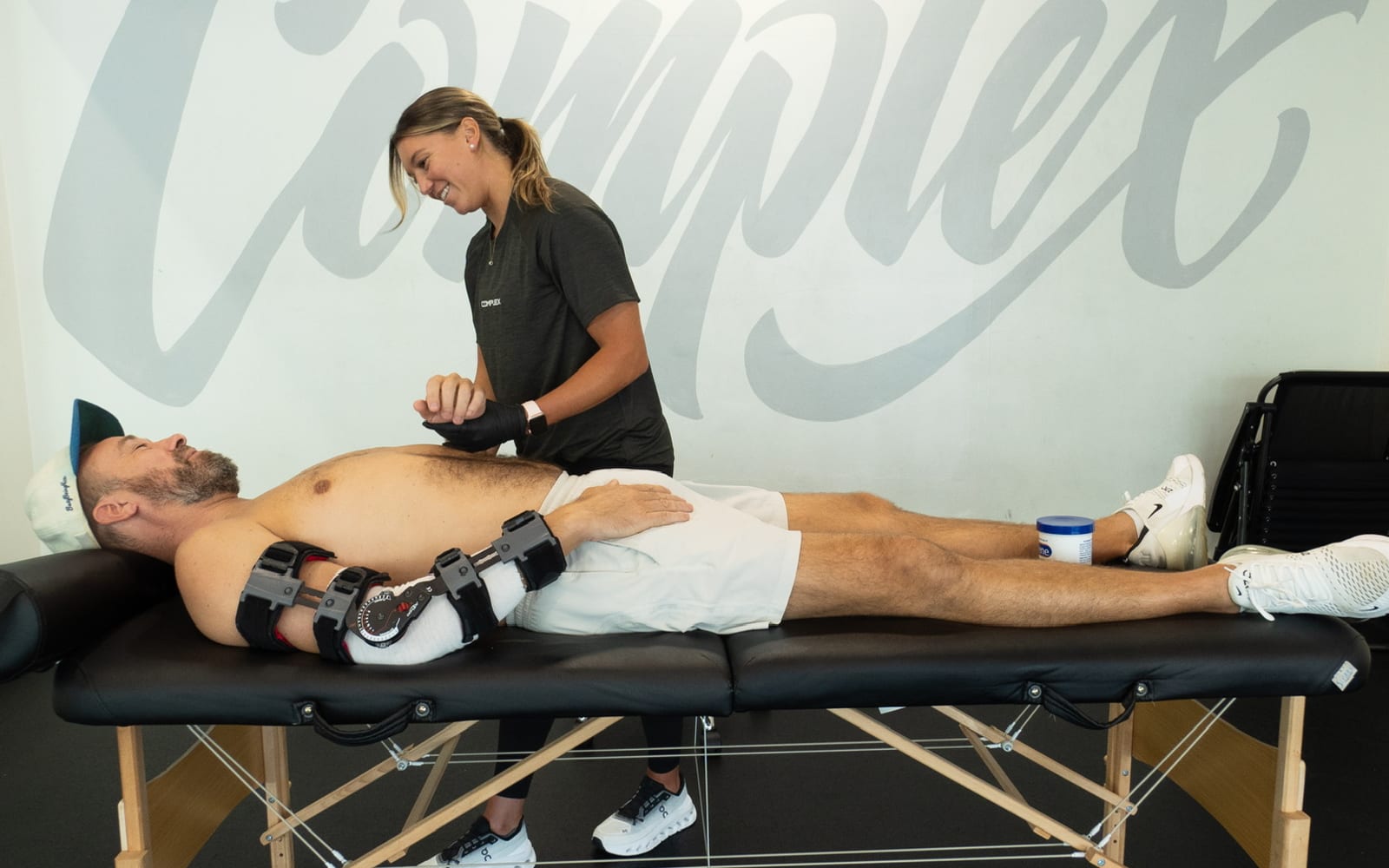
Restore motion, reduce flare-ups, and find baseline strength. This is where your PT figures out what the joint tolerates and what irritates it. It is not the glamorous phase, but it sets the ceiling for everything after.
Phase 2: Rebuild the big patterns
Squat, hinge, push, pull, carry, clean and progressive. We start with loads that feel almost too easy and build from there. Strength is the foundation that makes sport and daily life feel lighter.
Phase 3: Add sport spice
Rotations, lunges, short court bursts, or run-walk progressions depending on your goal. We introduce speed and direction changes gradually so your joints get used to them before a Saturday game asks for them.
Phase 4: Confidence under fatigue
Because life does not stress-test you when you are perfectly recovered. You will be tired, short on sleep, and distracted at some point. We want your movement to hold up then, too.
You do not move to the next phase on a calendar. You move when the current one feels solid and your joint stays calm afterward.
Guardrails for Busy Weeks
- Two quality sessions beat five chaotic ones
- Sleep debt means modify intensity, not abandon the plan
- Pain that worsens day-to-day is information, so use it
- Perfect is not the standard; consistent is
Let me expand on the first one. Many people assume they need five days a week to make progress. Often, two well-planned sessions with clear priorities do more than a scattered week of workouts you squeeze in between school pickups. If life swallows a session, do a shortened version of it. Ten focused minutes of your key movements still counts.
On a rough week, keep the pattern and trim the load or volume. A lighter session that you actually do is better than a heavy one you skip.
Weekend Warriors: The Monday Problem
Weekend athletes often train lightly or not at all during the week, then go hard on Saturday. That jump in demand can leave joints and tendons sore, especially after time away from activity. If you recognize yourself here, a few small changes help:
- Add one short midweek strength session so your body is not meeting the game cold
- Warm up properly before you play instead of treating the first set as the warm-up
- Ramp up game time and intensity gradually after a layoff
- Note how you feel on Sunday and Monday, not just during play
Your Monday-morning joint is the real scoreboard.
When Low Back or Hips Keep Interrupting
If low-back or hip issues keep interrupting training, a movement-quality lens helps. Pay attention to whether you can hinge, squat, and rotate without compensating, and whether one side behaves differently from the other. Our hip mobility for lifters approach applies here too.
Persistent or worsening pain deserves attention. Get evaluated for sharp pain, numbness, swelling, pain at night, or if you cannot bear weight. These are not things to tough out.
Where Rehab and Training Come Together
Returning to training works best when the person guiding you understands both rehab and performance. In physical therapy, we identify what caused the problem and what your joint can handle today. In performance training, we build the strength and conditioning that make the activities you love feel easy again, in sessions that fit around your schedule.
Frequently asked questions
How many days a week do I need to train after an injury?
There is no single number. Many busy people do well with two quality sessions per week, plus daily movement like walking. Your PT will help you pick a schedule you can actually keep, because consistency usually beats an ambitious plan that falls apart by Thursday.
What if my joint is sore the day after training?
Mild, short-lived soreness can be a normal response to new work. Pain that increases day after day, or swelling and stiffness that do not settle, suggest the plan needs adjusting. Tell your PT what you noticed so we can change load, volume, or exercise selection.
Can I keep playing my weekend sport while I rehab?
Sometimes, in a modified form. Your PT may suggest reducing time, intensity, or specific movements while you rebuild capacity. We decide based on your injury and how your joint has responded, not a blanket rule.
Ready to Get Back to It?
If you are ready for a return-to-training plan that fits your actual week, we can help at our South Miami or Wynwood location. Bring your goals and your calendar, and we will build around both.
Let's get you better. Book your return-to-training plan with Megan or contact us.
Ready to Start Your Journey?
Tell us your goals and we'll build a personalized plan to get you moving, stronger, and performing at your best.